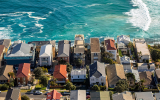


When we think of the great Australian dream, most of us will likely picture a freestanding house.
But as governments look to boost the amount of homes available, new visions of what that dream could look like are diversifying.
Last week, the NSW government launched the NSW Pattern Book of low and mid-rise designs, alongside an accelerated planning pathway, designed to significantly speed up delivery of new homes.
For a limited time the designs are available for a mere $1.
“This Pattern Book is about giving people more choice, faster approvals, and affordable, high-quality homes – whether you’re a young person trying to get in, a family needing more space, or a downsizer looking to stay close to the community you know,” NSW Premier Chris Minns said at the launch.
The scheme seems to have all the building blocks, pardon the pun, to get Australians on board with a dwelling style that is higher density, but still fits into our suburban dream.
There are three styles of residential buildings available in the eight designs approved by the government architect.
They are townhouses, terraces and manor houses.
What’s old is new again
While townhouses and terraces are easily recognised styles, the manor house is an interesting concept.
Conrad Johnston, the director of architecture firm Studio Johnston, which created one of the selected manor house designs, said they took inspiration from a style of unit blocks that already exists.
“Our design reimagines the classic ‘four- or six-pack’ apartment buildings of the interwar period with modern living standards and sustainability,” Johnston said.
Manor homes are just two storeys and have four apartments.

Johnston said it sought to be the answer to the “missing middle” – the shortfall of low and mid-rise housing options that sit between the typical detached house and high-rise apartments.
While this is a particularly acute issue in major capital cities such as Sydney and Melbourne, it is also a concern for places like Canberra and regional cities such as Newcastle and Wollongong in NSW and Ballarat and Bendigo in Victoria.
“Many people want to live in well-connected suburbs, close to jobs and services. But the traditional suburban model just isn’t sustainable at our current densities,” Johnston said.
“Manor Homes 01 is about adding gentle density and creating homes that people genuinely want to live in.”
Why I know this works
Full disclosure here, I live in one of those six-pack-style interwar apartment blocks that Johnston refers to, and the advantages of this scale of building are not lost on me.
My street is a mix of freestanding homes, along with these smaller apartment blocks. They do not jar or overwhelm, but sit harmoniously together.
As with the suburban properties that so many of us are familiar with, there is a dedicated front and back yard.
Yes, these garden areas are shared but that leads to beautiful shared moments. For example, children from different apartments meeting together to play in their backyard.
The garden is also a great common area for people to host family and friends in the barbecue and dining area, giving them access to a large suburban-sized yard.
The smaller number of apartments in a human-sized block creates a strong sense of community with residents, while also allowing privacy.
Admittedly, these original apartments lack somewhat in capturing light and airflow, for example. However, a few key renovations fix that.
A modern approach
The manor houses available in the Pattern Book, including Manor Homes 01, have been designed to prioritise sustainability and provide good access to sunlight and clean air.
Passive solar design, cross-ventilation, daylight access, sun-shading and the potential for rooftop solar panels are all at the forefront.
Efficient planning and simple construction systems help to contain costs, ensuring the design remains an achievable solution for diverse sites and developers.
“Our goal was to create a pattern that’s elegant, liveable, and replicable,” Johnston said.
They are also designed to fit in with various streetscapes with flexibility in material choices, colour palettes, and dwelling mixes.
Making it happen
While the concept of these new home designs is good, to ensuring they are taken up and therefore increase housing supply, delivery is important.
For six months, the NSW government will significantly subsidise access to these designs with each available to everyone for $1 a pattern.
After that, they will still be available but for $1000 a design.
The price for each design is a significant discount on the professional fees that potential builders or homeowners would usually pay for a custom architecturally-designed home. That could be estimated to cost over $20,000.
Every purchase of a design also comes with a complimentary landscape pattern to help new homeowners design a garden that maximises biodiversity and suits their climate.
Most important, the state government has developed a 10-day approval pathway alongside the Pattern Book to fast-track these high-quality homes, cutting major costs and delays that normally plague home-builders.
It is designs like these that might help us rethink the great Australian dream.
This article first appeared on View.com.au. Read the original here


Live News