


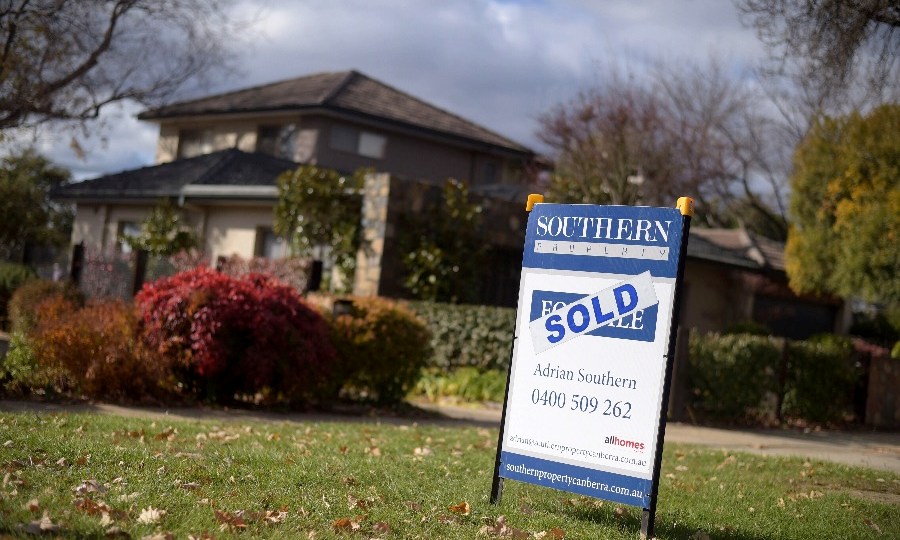


Homeowners and property investors may rub their hands together at Australia’s ever-increasing house prices.
However, for the growing number of Australians who have yet to secure a foothold in the property market, the great Aussie dream can feel increasingly out of reach.
A parliamentary report released in May found rising house prices in Australia have helped home ownership decline from 70 per cent in 1981 to 67 per cent in 2021.
The decline is particularly apparent among young people.
For those aged 25-34, home ownership has decreased from 61 per cent to 43 per cent. In comparison, for those aged 55-64 home ownership has decreased from 81 per cent to 76 per cent.
More than one type of home
Ben Phillips, an associate professor from the ANU’s Centre for Social Policy Research, said home purchase affordability was a substantial issue in Australia.
With more interest rate cuts expected this year and housing supply not keeping up with demand, it could be an issue for some time to come, he said.
“The problem is clearly not unique to Australia. But house prices relative to income are very high in Australia, and higher than most other developed nations,” Phillips said.
However, he argued some policy reforms could put the brakes on runaway house prices.
“The main policies that would potentially improve affordability would be, firstly, supply-side reforms, particularly around zoning,” he said.
“These reforms would increase the supply of new dwellings in well-located areas, particularly inner and middle-ring regions of major cities and towns.”
He argued they would improve the efficiency of Australia’s housing market with better-located and less-expensive housing styles, such as more townhouses and units, and splitting large blocks into multiple dwellings.

Help or hindrance
Phillips said removing first-home buyer grants and stamp duty discounts could also ease house price growth.
“While first-home buyer grants do help some new buyers, it is also true that they likely lead to increases in house prices and may largely help those who were going to purchase anyway,” he said.
“Perhaps they purchase earlier than otherwise or buy a larger or better dwelling.
“Stamp duty discounts also work in a similar way when directed toward first home buyers.”
Independent property researcher Cameron Kusher agreed.
“One of the reasons we’ve continued to see housing prices rise over recent decades is due to the type of support that governments, both state and federal, offer to first-home buyers,” he said.
He argued the easiest way for governments to assist first-home buyers to enter the housing market was through cheaper housing.
“But pretty much all of the incentives that are offered to assist first-home buyers enter into the housing market … lead to further increases in property prices,” he said.
“The assistance provided to first-home buyers keeps getting larger and more creative and is more about helping first-home buyers to enter the market at high prices and stimulate further price growth rather than to genuinely improve housing affordability.”
Is regional housing the answer?
Greater connectivity between cities and to regional areas and increasing the supply of housing would also slow house price growth, Kusher said.
“What if we built faster rail from each of our larger capital cities to surrounding areas where housing is cheaper?” he said.
“What if, in Sydney, you could commute within an hour and a half to Cessnock, Lithgow or Bathurst or within two hours to places like Goulburn and Canberra? What if, in Melbourne, you could commute much more quickly to Shepparton, Morwell, Bendigo or Ballarat?
“I have no doubt that the much lower cost of housing in these areas and the fact that housing is available on larger lot sizes than new housing in the capital cities would see many choose to move to these areas.
Kusher said such an approach would also require greater investment in new housing and infrastructure in regional areas. An increase in the supply of housing could bring prices down and could be driven in several ways, he said.
“This would include relaxing zoning restrictions and upzoning more sites for development, limiting heritage listing of properties, making the development application process more streamlined, speeding up the development approval process and investing in key infrastructure to enable more housing development,” he said.
Despite ownership rates continuing to fall due to rising house prices, Kusher said the issue of housing affordability was problematic for governments and policy makers.
“Unfortunately, lower property prices are not something that most people want because most people still own property – and the escalation in the value of that property is the greatest source of their wealth,” he said.
This article first appeared on View.com.au. Read the original here


Live News